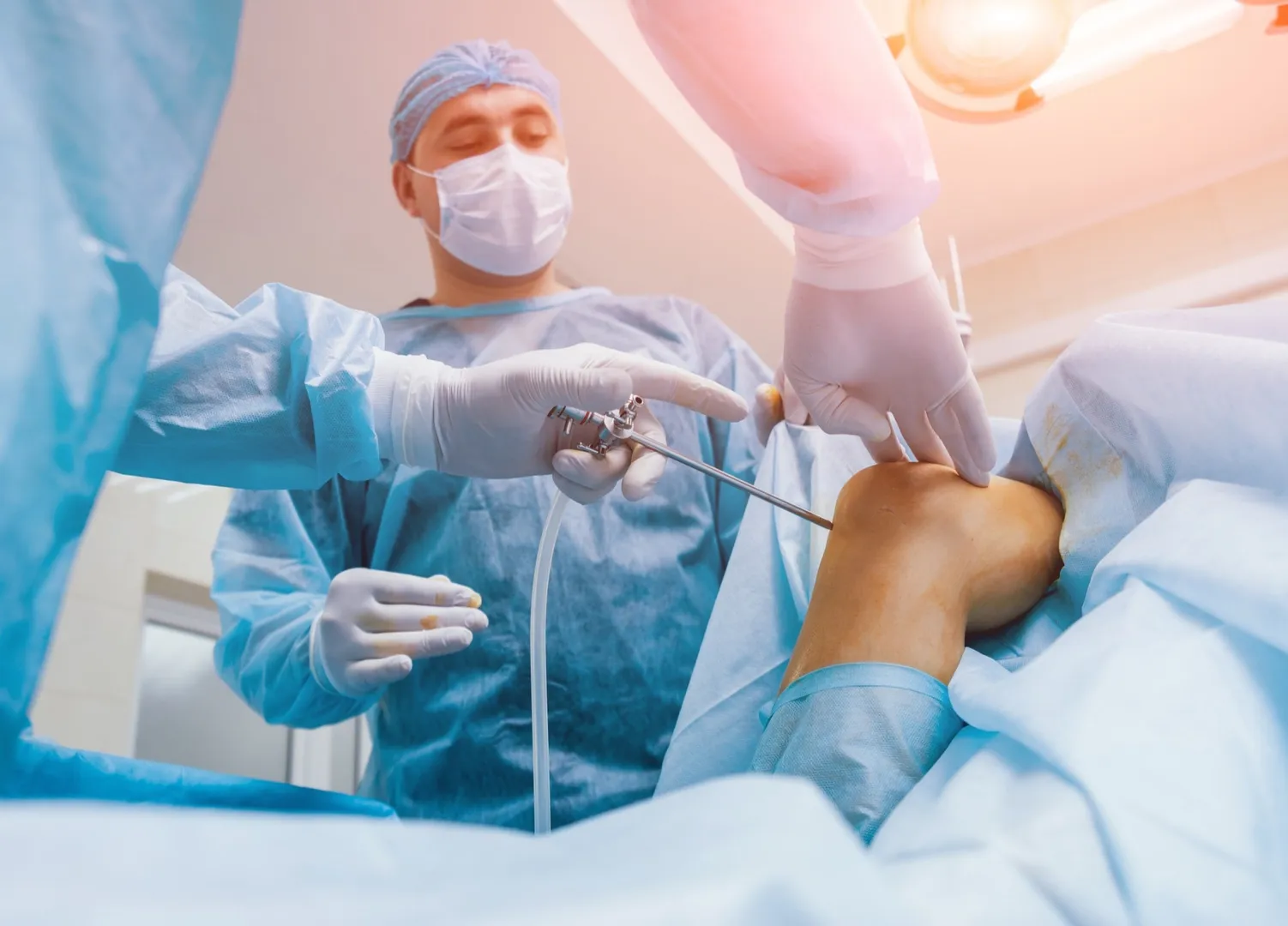
Persistent pain after an injury does not automatically mean you need arthroscopy, and an MRI report alone cannot make that decision. The key question is whether your symptoms, examination findings, imaging and response to non-surgical care point to a problem that surgery could realistically improve.
Key takeaways
- Seek prompt assessment for a locked knee or repeated swelling.
- An MRI shows structural changes but does not prove surgery is necessary.
- Compare rehabilitation, risks, recovery time, and expected benefit before arthroscopy.
- Ask when non-surgical treatment has been adequate for your specific injury.
Which knee or shoulder symptoms need an arthroscopy consultation?
A locked knee that cannot fully straighten because something is mechanically blocking it needs prompt orthopaedic assessment. Arthroscopy consultation symptoms also include knee catching, recurrent knee swelling, joint-line pain after twisting, instability, suspected meniscus or ACL injury, and persistent pain after an injury.
Shoulder symptoms justify an outpatient consultation when weakness limits lifting, pain restricts use, the joint feels unstable, or it has dislocated repeatedly. A suspected labral tear or rotator-cuff injury deserves examination, especially after trauma. The surgeon will compare movement, strength, swelling and stability; an MRI finding alone does not prove that surgery will help.
| Assessment level | Symptoms or findings | What to do |
|---|---|---|
| Routine outpatient | Persistent post-injury pain, recurrent swelling or catching, joint-line knee pain, shoulder pain limiting lifting, suspected meniscus, labral or rotator-cuff injury | Arrange an orthopaedic or arthroscopy consultation |
| Prompt assessment | A true locked knee, marked instability, suspected ACL injury, sudden major swelling, inability to bear weight or lift the arm, or a shoulder that repeatedly slips out | Seek same-day or early specialist assessment |
| Emergency assessment | A deformed joint, suspected unreduced dislocation, loss of sensation or power, or a pale or cold limb | Attend an emergency department immediately |
A hot, swollen, intensely painful knee with fever or feeling unwell needs urgent assessment for septic arthritis, not a routine arthroscopy referral. Joint aspiration and antibiotics may be time-critical. A first-time traumatic shoulder dislocation also needs prompt evaluation for labral, bone or nerve injury.
What happens during an arthroscopy surgeon consultation?
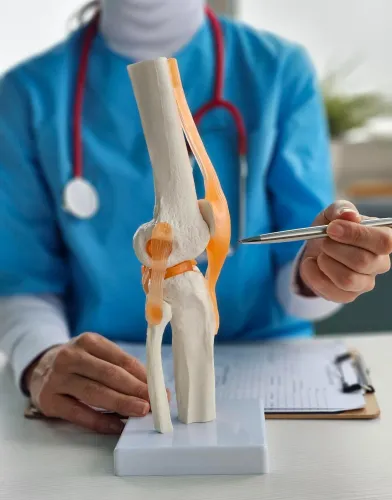
An arthroscopy surgeon consultation starts with a decision, not an operation: is surgery necessary, or can another plan restore function? The surgeon reviews the injury mechanism, symptom pattern, previous treatment, activity needs and goals, then examines movement, swelling, strength, stability and specific knee or shoulder signs.
Arthroscopy uses a small camera inserted through a portal to inspect the joint. If treatment is appropriate, instruments enter through other small arthroscopic portals. Diagnostic arthroscopy looks for the cause inside the joint; therapeutic arthroscopy treats a confirmed problem.
Examples of therapeutic procedures include:
- Meniscus repair or partial meniscectomy
- ACL reconstruction
- Cartilage treatment
- Shoulder labral repair
- Rotator-cuff repair
The consultation is different from these visits:
| Visit | Main purpose |
|---|---|
| Imaging appointment | Produces pictures; it does not decide whether surgery will improve symptoms. |
| Physiotherapy assessment | Measures movement and function, then plans rehabilitation. |
| Injection visit | Delivers medication to reduce pain or inflammation. |
| Joint-replacement consultation | Considers replacing a severely damaged joint rather than treating a focal problem through portals. |
Seeing the surgeon is not consent to surgery. The recommendation may instead be rehabilitation, activity modification, medication or an injection, based on your examination, scans, symptoms and goals.
Which tests are useful, and what can an MRI actually prove?
A weight-bearing knee X-ray often comes before advanced imaging because it shows what happens under load: fracture, alignment, joint-space loss and arthritis. A shoulder X-ray shows fracture, arthritis, joint-space changes and some bone-shape abnormalities. Neither shows a meniscus or labrum clearly.
| Test | Useful for | Important limit |
|---|---|---|
| Weight-bearing knee X-ray | Fracture, alignment, joint-space loss and arthritis under load | Does not show the meniscus, ACL or other soft tissues clearly |
| Shoulder X-ray | Fracture, arthritis, joint-space changes and some bone-shape abnormalities | Does not show the labrum or rotator-cuff tendons clearly |
| Shoulder ultrasound | Some rotator-cuff tendons, including movement during a dynamic assessment and comparison between sides | Does not provide a complete view of deep joint structures |
| Knee MRI | Menisci, ACL and other ligaments, cartilage, labrum, bone marrow and rotator-cuff tendons | An abnormal finding does not prove arthroscopy will help |
MRI answers an anatomical question, not the entire treatment question. A knee MRI can report a degenerative meniscus tear, and a shoulder MRI can show rotator-cuff tendinopathy or a partial-thickness tear, without either finding causing the person’s symptoms.
A true mechanically locked knee carries more weight than an isolated “meniscal tear” phrase because something is physically blocking full straightening. The injury pattern, joint-line tenderness, recurrent swelling, examination findings and functional weakness also matter.
After a twisting injury, persistent catching or locking supports specialist review; shoulder surgery becomes more relevant when traumatic weakness persists and rehabilitation has not restored useful function.
How long should you try non-surgical care before specialist assessment?
There is no safe countdown that applies to every knee or shoulder injury. Start non-surgical treatment before arthroscopy for less urgent symptoms, but seek assessment promptly when the injury or loss of function suggests a repairable problem.
1. Arrange prompt assessment after a major traumatic injury, a locked knee that cannot fully straighten, recurrent shoulder dislocation, marked weakness, or inability to bear weight or use the arm. Loss of sensation or power, a pale or cold limb, or an obvious deformity needs emergency care.
2. For less urgent pain, use clinician-guided activity modification, appropriate pain relief, treatment of inflammation and exercise-based physiotherapy. Physiotherapy for meniscus tear and other knee symptoms usually focuses on strength, movement and function rather than automatically removing tissue.
3. Arrange specialist assessment when pain still limits work, sleep, walking, lifting or sport; swelling or catching repeatedly returns; instability persists; or strength fails to recover. After a twisting injury, persistent joint-line pain, recurrent swelling or suspected repairable meniscal injury makes consultation more relevant.
4. Treat a degenerative meniscus tear without true locking like knee osteoarthritis at first, using exercise and symptom management rather than automatic arthroscopic trimming. For atraumatic shoulder tendinopathy or presumed impingement, exercise-based care is preferred over routine subacromial decompression.
5. Consider a surgical opinion for an acute repairable meniscal injury, traumatic rotator-cuff tear, or persistent weakness or shoulder instability after appropriate rotator-cuff rehabilitation. An MRI finding alone does not establish that surgery will help.
What should you compare before agreeing to arthroscopy?
Compare the expected benefit, not just the MRI finding. Ask which symptom the operation is meant to change: locking, instability, weakness, or pain. In arthroscopy versus physiotherapy, surgery needs a specific target; degenerative pain without true locking often responds better to exercise-based rehabilitation.
| Option | What it involves | When it fits |
|---|---|---|
| Continued rehabilitation | Exercises, activity changes, pain relief, or injections | Pain without a repairable injury, especially knee osteoarthritis |
| Arthroscopy | Camera-guided repair or trimming through small portals | A confirmed problem matches the symptoms and has not improved with appropriate care |
| Open surgery | A larger incision to reach and treat the joint | The problem cannot be safely or effectively addressed through portals |
Ask whether the goal is repair or trimming, and what restrictions follow. Meniscus trimming usually allows different weight-bearing than meniscus repair; ACL reconstruction, labral repair, and rotator-cuff repair require their own bracing, lifting, or arm-use limits.
Discuss arthroscopy anaesthesia and rehabilitation: general anaesthesia, spinal anaesthesia, or a regional nerve block; physiotherapy appointments; driving limits; and the expected recovery timeline. Weigh infection, bleeding, blood clots, stiffness, nerve or blood-vessel injury, persistent pain, and the risk that arthritis pain will remain.
For knee osteoarthritis, routine lavage or debridement does not provide important lasting benefit over non-operative care. Arthroscopy versus open surgery should be decided from the anatomy and treatment goal. Shanthi Orthopaedic And Dental Clinic can help review examination findings, existing scans, and goals before you choose specialist arthroscopy advice.
Frequently asked questions
Which knee or shoulder symptoms need an arthroscopy consultation?
Seek assessment for a locked knee, repeated catching, recurrent swelling, joint-line pain after twisting, instability, suspected meniscus or ACL injury, persistent post-injury pain, or shoulder pain with catching, weakness, instability, or restricted movement.
What happens during an arthroscopy surgeon consultation?
The surgeon reviews how the problem started, examines movement, strength, stability and tenderness, checks previous treatment and scans, then explains whether arthroscopy, further testing or non-surgical care fits your condition.
What can an MRI actually prove?
An MRI can show structures such as a meniscus tear, ligament injury, cartilage damage, tendon problem or joint inflammation. It cannot prove that the finding causes your symptoms or that surgery will improve them.
How long should you try non-surgical care before specialist assessment?
Do not delay assessment for a locked joint, major instability or a serious injury. For less urgent symptoms, the appropriate trial depends on the examination, diagnosis, pain level and response to guided rehabilitation.
What should you compare before agreeing to arthroscopy?
Compare the diagnosis, expected benefit, alternatives, rehabilitation time, work and sport restrictions, complications, anaesthesia, surgeon experience and the consequences of waiting.