
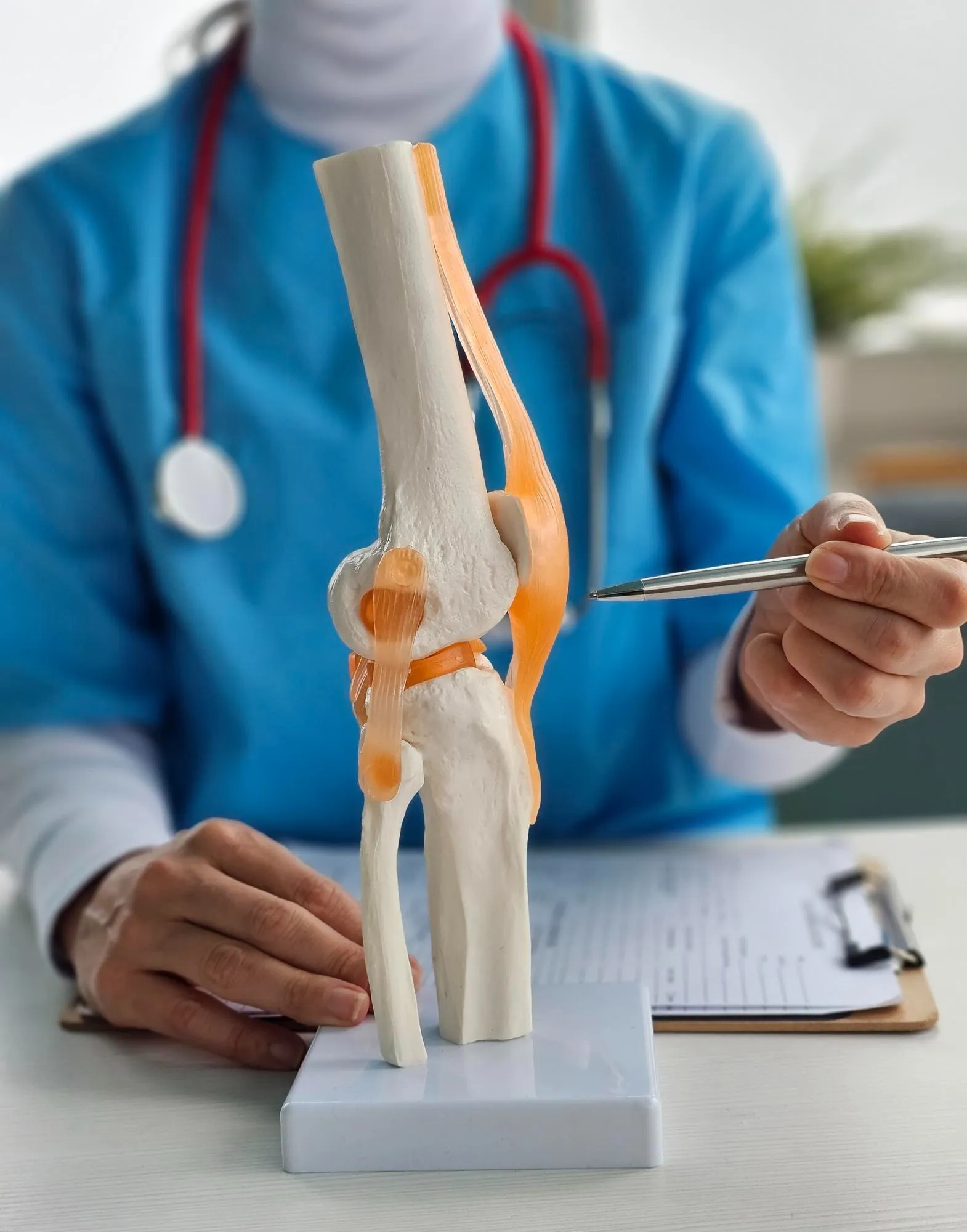
Pain, swelling or stiffness deserves more than a guess when it persists, keeps returning or changes how you walk, work, sleep or use a limb. By the end, you will know which symptoms need a routine orthopaedic appointment, which require urgent care, which clinician fits the pattern and what an evaluation can—and cannot—tell you about treatment.
Key takeaways
- Book an evaluation when symptoms last several weeks or limit daily activities.
- Seek urgent care after serious injury, visible deformity, or inability to bear weight.
- Start with an orthopaedic surgeon for persistent bone, joint, muscle, or movement problems.
- An evaluation identifies treatment options; it does not automatically lead to surgery.
Which symptoms mean you should book an orthopaedic evaluation?
Bone and joint pain needs an orthopaedic evaluation when it lasts more than several weeks, worsens despite rest or treatment, or limits walking, work, sleep or ordinary tasks. The key orthopaedic evaluation symptoms are functional: pain intensity alone does not determine the need for assessment.
Book an appointment if you notice:
- Recurrent joint swelling after the same activity, even when each episode settles
- Joint stiffness and limited movement, weakness, instability, deformity or reduced ability to bear weight
- Repeated symptoms after running, lifting, sports or another activity
- A persistent or recurring limp in a child, even when it causes little or no pain
- Back pain with loss of height or a stooped posture, which can signal a vertebral compression fracture
- A fracture after a standing-height fall or another low-energy event in an older adult; ask about bone-density testing, osteoporosis risk and reversible causes
Pattern matters. Repeated flare-ups can indicate an underlying tendon, ligament, cartilage, joint or bone problem that self-care is not addressing. A child who keeps limping needs assessment rather than reassurance based on low pain.
| Symptom pattern | Why evaluation matters | Typical next step |
|---|---|---|
| Pain lasting several weeks | The problem is not resolving normally | Routine orthopaedic appointment |
| Repeated swelling or instability | Activity may be exposing structural damage | Examination and possible imaging |
| Sudden inability to bear weight, major deformity or suspected fracture | Injury may require prompt treatment | Urgent medical assessment |
When is a bone or joint problem urgent rather than routine?
Seek urgent orthopaedic assessment after trauma if you have severe pain or any of these signs:
- A suspected fracture, major dislocation or visibly deformed joint
- Inability to bear weight after an injury
- Sudden loss of movement
- Numbness, new weakness, pale or blue skin, or a cold limb
The first three require prompt medical care; nerve or blood-vessel symptoms require emergency assessment because circulation or nerve function may be threatened.
A rapidly hot swollen joint with fever or chills is not an ordinary arthritis flare. Severe pain, rapid swelling and difficulty moving the joint can indicate septic arthritis, which requires emergency medical assessment rather than treatment with painkillers alone.
New back pain with difficulty passing urine, loss of bladder or bowel control, numbness around the genitals or anus, or progressive weakness in either leg constitutes cauda equina red flags. Go to emergency care because these symptoms can signal major nerve compression.
A child who suddenly refuses to walk or cannot bear weight needs urgent assessment, especially with fever or a toxic appearance. Do not wait for a routine appointment.
Seek emergency dental or medical care for facial or neck swelling with fever, difficulty swallowing or breathing, or inability to open the mouth; these symptoms can indicate a spreading dental infection.
Which clinician should assess the problem first?
Start with the suspected cause, not simply the body part that hurts. An orthopaedic surgeon or physiotherapist is appropriate for different patterns, while a primary-care doctor can sort out symptoms that do not yet have a clear cause.
| Starting point | Best fit | Clue |
|---|---|---|
| Orthopaedic surgeon | Structural or mechanical problem | Persistent or recurrent bone, joint, ligament or tendon symptoms; instability, deformity, suspected fracture complications or loss of function |
| Physiotherapist | Movement, strength or recovery problem | Symptoms remain after a serious injury has been excluded, with weakness, restricted movement or impaired function |
| Primary-care doctor | Undifferentiated symptoms | Several symptoms, unclear cause, medication effects or general medical contributors requiring examination and coordinated tests |
| Rheumatologist referral | Possible inflammatory arthritis | Persistent morning stiffness, visible synovitis or swelling in several joints, especially the small joints of the hands or feet |
Request a rheumatologist referral for suspected persistent synovitis even when blood tests are normal or have not been done. Waiting for abnormal results can delay treatment.
Pain can be referred from another joint. Hip pain felt in the knee, particularly when the knee examination is normal, needs hip assessment; groin pain with reduced hip rotation also points toward the hip.
Painful chewing, jaw locking, restricted opening or a changed bite usually belongs first with a dentist or oral and maxillofacial clinician. Painless clicking alone is common and does not establish a jaw disorder.
Rapid facial or neck swelling, fever, trouble swallowing or breathing, or inability to open the mouth requires emergency care, not a routine orthopaedic appointment.
What happens during an orthopaedic evaluation?
Expect the clinician to start with a symptom timeline: when the problem began, how an injury occurred, where the pain is most precise, and which activities aggravate it. They will also ask about previous diagnoses, medication, prior treatment and changes in walking, work, sleep or daily function.
The orthopaedic physical examination may include observing your gait and checking active and passive movement. Gait and range-of-motion testing is followed by strength checks, joint-stability tests and inspection for swelling or deformity. A neurovascular examination checks sensation, pulses, skin colour and temperature; abnormal findings can signal nerve or blood-vessel compromise.
Imaging answers specific questions rather than replacing the examination. An X-ray shows fractures, alignment and advanced arthritic change. Ultrasound assesses selected superficial tendons, muscles, fluid collections and other soft-tissue problems. MRI shows cartilage, meniscus, ligament, tendon and bone-marrow findings, while CT provides detailed bone anatomy and helps assess complex fractures.
Uncomplicated acute low-back pain without red flags usually does not need immediate X-ray, CT or MRI when the result would not change management. Imaging becomes more useful when serious disease, neurological deficits, persistent or worsening symptoms, or a treatment decision is under consideration.
Bring these items to make the appointment more efficient:
- A dated symptom timeline and the injury date, if there was an injury
- Your medication list, including painkillers and supplements
- Medical records, previous diagnoses and treatment details
- Previous images and reports through secure disc or portal access when available
Why evaluation does not automatically mean surgery
Seeing a surgeon is an evaluation, not a consent form for surgery. The examination, loss of function, imaging findings and response to earlier treatment determine the orthopaedic treatment options. A scan alone does not dictate treatment: its findings must match your symptoms and examination.
| Option | What determines it | What it may involve |
|---|---|---|
| Observation | Symptoms are improving and function is returning | Watchful follow-up and gradual return to activity |
| Non-operative care | Pain or limitation is manageable without structural danger | Activity modification, medication, physiotherapy, injection or bracing |
| Surgery | Persistent disability, instability, deformity or damage despite appropriate care | Discussion of procedure, benefits, risks and alternatives |
A surgeon may recommend observation versus surgery based on progress rather than the most alarming phrase in an imaging report. Additional medical assessment may come first when inflammation, infection, osteoporosis or nerve involvement changes the plan.
Ask for reassessment when pain worsens despite rest or treatment, function declines, swelling returns repeatedly, or the same problem keeps recurring after activity. Seek emergency care for a suspected fracture, major dislocation, a cold or blue limb, new numbness or weakness, or a hot swollen joint with fever.
In Andheri West, Shanthi Orthopaedic And Dental Clinic can provide an outpatient setting to discuss findings, compare options and arrange the right referral when routine care is appropriate.
Related service
Orthopaedic General Orthopaedic Conditions – Shanthi Orthopaedic and Dental Clinic Shanthi Orthopaedic and Dental Clinic provides comprehensive care for a wide... View service → |
Frequently asked questions
Which symptoms mean you should book an orthopaedic evaluation?
Book an evaluation when bone or joint pain lasts several weeks, worsens despite rest or treatment, or limits walking, work, sleep, or ordinary tasks.
When is a bone or joint problem urgent rather than routine?
Seek urgent assessment after a serious injury, when a joint or limb looks deformed, when you cannot bear weight, or when pain and loss of movement appear suddenly.
Which clinician should assess a persistent bone or joint problem first?
An orthopaedic surgeon is an appropriate first clinician for persistent problems involving bones, joints, muscles, ligaments, tendons, movement, or function.
What happens during an orthopaedic evaluation?
The clinician reviews your symptoms, injury or medical history, daily limitations, and medications, then examines movement, strength, alignment, swelling, and tenderness before deciding whether tests are needed.
Does an orthopaedic evaluation automatically mean surgery?
No. Evaluation determines the cause and severity of the problem and may lead to options such as activity changes, medication, physiotherapy, injections, monitoring, or surgery when necessary.