Adult teeth straightening is not one standard procedure: the right choice depends on your bite, gum health, tooth movement required, appearance preferences, budget and willingness to follow daily instructions. You will be able to compare treatment routes, understand the consultation process and identify the questions that matter before committing.
Key takeaways
- Complete a dental and gum assessment before choosing an orthodontic appliance.
- Compare braces and aligners against your bite, restorations, habits and treatment priorities.
- Ask how often aligners must be worn and what could extend the estimated treatment time.
- Plan for retainers and long-term checks before treatment begins.
What happens from the first consultation to fitting the appliance?
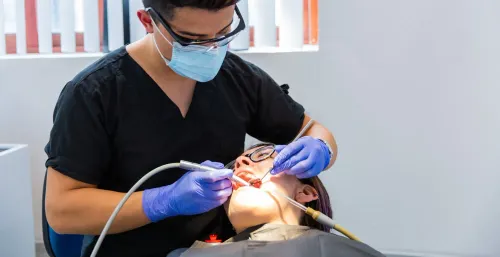
Adult orthodontic treatment starts by checking whether moving your teeth is safe, not by choosing an appliance. An adult orthodontic consultation records your medical and dental history, previous trauma, earlier orthodontic treatment, restorations, missing teeth and gum symptoms. This history helps identify root-resorption risk and treatment that needs another clinician’s input.
1. During the orthodontic examination, the clinician checks your bite, tooth movement and gum health. Active periodontal disease must be treated before braces or aligners; applying force to inflamed supporting tissues can worsen attachment and bone loss.
2. Dental photographs document the starting position and facial appearance. X-rays and digital scans show the roots, supporting bone and available space. Radiographs become especially important after dental trauma, with planned large movements or when root shortening is a concern.
3. The clinician converts these findings into a written plan. It may redistribute space for an implant, close a gap around a missing tooth or prepare teeth for crowns. A large upper-to-lower jaw discrepancy cannot be grown out in an adult and may need orthognathic surgery rather than orthodontics alone.
4. After you review the appliance, risks, alternatives, estimated duration and fees, the clinician fits brackets or attachments, or checks the first aligner’s fit. You receive cleaning and wear instructions, then attend planned reviews to adjust wires or assess aligner tracking. A digital simulation is a plan, not a guarantee.
Which treatment option fits your teeth, bite and priorities?
Choose the appliance by the movement your teeth need, then weigh appearance, discipline, comfort and cost. A discreet option is not automatically the most effective one.
| Option | Main advantage | Trade-off or best fit |
|---|---|---|
| Metal braces | Strong control of rotations, roots, vertical movement and complex bites | Visible, but reliable for substantial tooth movement |
| Ceramic braces | Less noticeable fixed brackets | Brackets can fracture and may wear the opposing tooth if poorly managed |
| Self-ligating braces | Brackets use a built-in clip instead of elastic ties | The design does not guarantee faster treatment; movement control still depends on the case |
| Lingual braces | Fixed brackets sit behind the teeth | Higher cleaning difficulty, initial tongue irritation and speech changes |
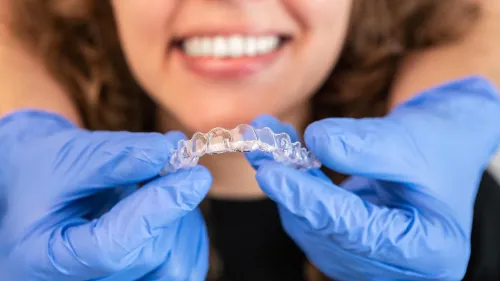
| Clear aligners for adults | Removable and discreet | Require prescribed wear and may need attachments, elastics, interproximal reduction or refinements |
Clear aligners suit straightforward crowding, spacing and selected bite corrections when you can wear them consistently. Fixed appliances deserve preference when teeth need major rotation, root control, vertical repositioning or dependable elastic mechanics. The digital simulation is a plan, not a promise that every movement will track.
Ask whether the proposed treatment corrects your bite or only disguises a jaw problem. Orthodontics cannot make an adult jaw grow; a large upper-to-lower jaw discrepancy may need orthognathic surgery alongside braces or aligners. Active gum disease must be assessed and controlled first, because orthodontic force can worsen attachment and bone loss.
Restorations, missing teeth, previous relapse and your budget also belong in the decision.
How can you judge an aligner plan and its likely treatment time?
A credible plan gives you more than a computer animation: it names the movements, estimated months, review intervals and likely finishing steps. The simulation is a forecast, not a guarantee that every tooth will track as shown.
| System | What distinguishes it | What to check |
|---|---|---|
| Invisalign | A branded system using proprietary planning software, materials and trained-provider workflows | Who reviews the plan and what happens if tracking fails |
| Generic aligners | Third-party aligners with variable software, materials and clinical supervision | The prescribing orthodontist’s role, review schedule and refinement policy |
| In-house aligners | Planned, made or modified within the treating clinic | Who designs each stage, checks progress and remakes trays |
Ask these questions before accepting the quoted timeline:
- Does the plan include attachments, interproximal reduction or elastics? These features add control but also appointments and cleaning demands.
- How many hours each day must you wear the trays, and what happens after a missed week? Poor wear commonly causes tracking errors and refinements.
- Which teeth have difficult movements, such as major rotations, root control, extrusion or deep-bite correction? Fixed braces often control these movements more predictably.
- Is active gum disease treated first? Moving teeth through inflamed supporting tissues can worsen attachment and bone loss.
- Does the scan show a large upper-to-lower jaw discrepancy? A non-growing adult with a severe skeletal problem may need orthodontics combined with orthognathic jaw surgery; aligners alone may only camouflage it.
At Shanthi Orthopaedic And Dental Clinic, use the consultation to ask who checks each stage, not only which brand appears on the box. Accident, broken attachments, delayed reviews and missed wear also extend treatment.
Related service
Dental services Invisalign and Aligners/ Braces -Metal/ceramic/self-ligating Invisalign, Clear Aligners & Braces at Shanthi Orthopaedic and Dental Clinic Achieve a straighter, healthier-looking smile with professional... View service → |
What will treatment require during ordinary days?
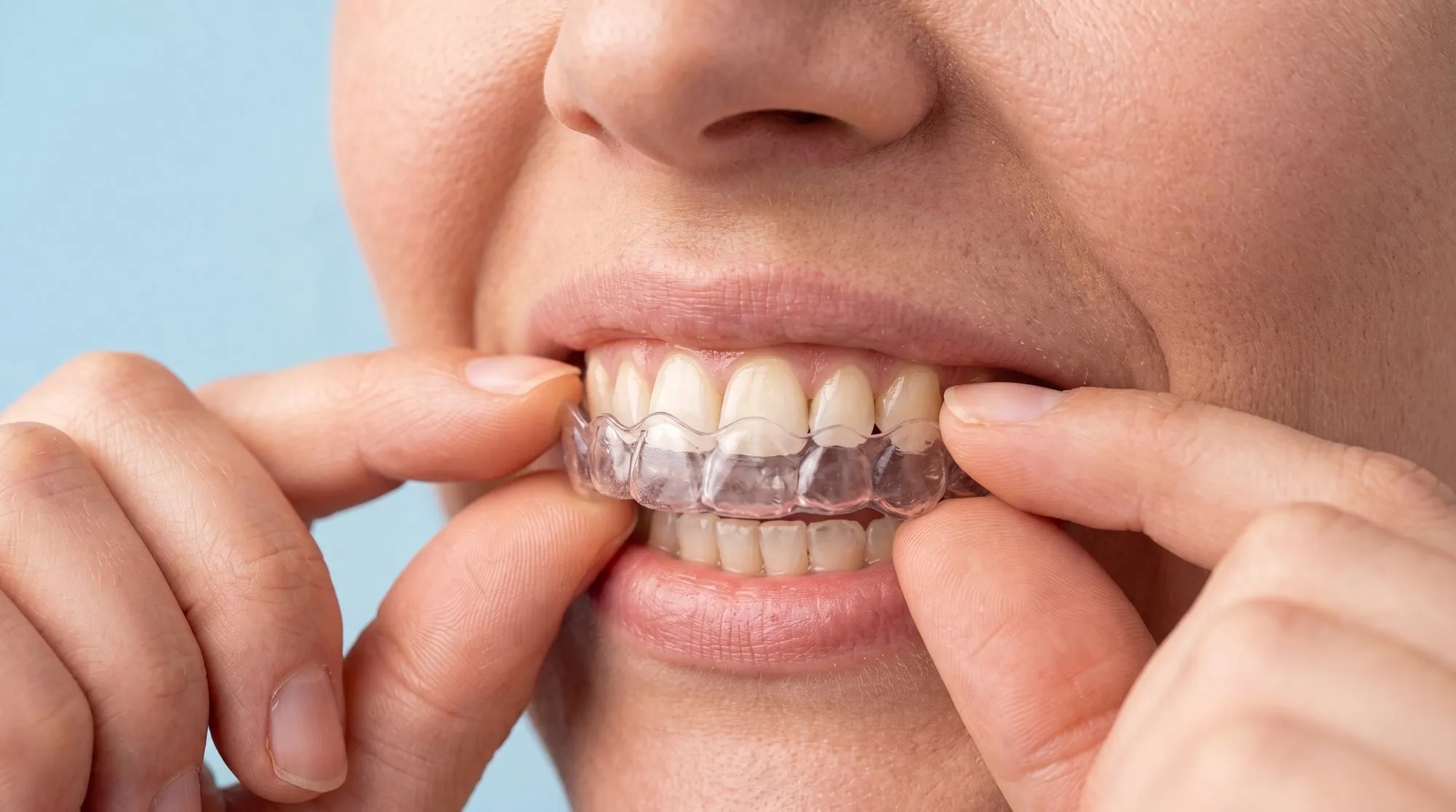
Clear aligners work only while they are in your mouth. Follow the prescribed clear-aligner wear time, commonly 20 to 22 hours daily, and remove them only for eating, drinking anything except water, brushing and flossing.
For cleaning aligners, rinse them with cool or lukewarm water and use a soft brush; hot water can distort the plastic.
Braces need more cleaning, not less. Use fluoride toothpaste and spend extra time brushing around brackets, wires and the gumline. Interdental brushes help clean beneath the wire and between teeth.
Avoid hard foods such as ice and nuts, sticky foods such as toffee, and frequent sugary drinks, because trapped plaque can cause white-spot lesions or decay.
Mild orthodontic discomfort after fitting, an adjustment or a new aligner is common. Choose softer foods, use orthodontic wax over rubbing brackets and take an over-the-counter pain medicine only as directed on its label. Contact your orthodontist if pain is severe, persists, or comes with swelling.
Use this active-treatment checklist:
- Wear each aligner in the correct sequence and do not move ahead if it no longer fits.
- Keep aligners in their case during meals; never wrap them in a napkin.
- Attend adjustment or scan appointments, even when progress looks satisfactory.
- Report a loose bracket, broken wire, lost aligner or attachment promptly.
- Keep routine dental and gum-care visits; untreated inflammation can make tooth movement unsafe.
Why are retention and long-term checks part of the treatment?
Straight teeth are not self-retaining. Teeth respond to chewing forces, tongue pressure, gum fibres and normal adult changes, so orthodontic retainers are part of treatment rather than an optional extra. Your orthodontist will prescribe a removable retainer, a bonded retainer, or both, with wear often continuing indefinitely.
A practical retention routine includes:
- Wear the removable retainer exactly as prescribed; reducing use without approval can trigger relapse after orthodontic treatment.
- Remove it for eating unless instructed otherwise, then brush your teeth before replacing it.
- Clean the retainer with cool water and a soft brush; hot water can distort the plastic.
- Store it in its case, away from pets, and replace it if it cracks, warps or no longer fits.
- Inspect a bonded wire and the surrounding teeth daily. Arrange bonded retainer repair promptly if the wire feels loose, breaks or catches floss.
Long-term checks examine tooth position, the bite, gum health and the condition of fillings, crowns or implants. Brush twice daily with fluoride toothpaste and clean between teeth, especially beneath a bonded retainer; plaque trapped there can cause decay or gum inflammation.
Active periodontal disease must be treated because orthodontic forces applied to inflamed gums can worsen attachment and bone loss.
Orthodontic movement can also cause root shortening, called external apical root resorption. Your clinician may compare dental X-rays when symptoms, movement patterns or treatment history create concern. Report increasing tooth mobility, persistent pain or a retainer that suddenly will not fit rather than forcing it.
Frequently asked questions
What happens at an adult orthodontic consultation?
The orthodontist reviews your medical and dental history, previous trauma or treatment, restorations, missing teeth and gum symptoms. They then assess whether tooth movement is safe and whether another clinician should be involved.
How do you choose between braces and clear aligners?
Compare each option with your tooth positions, bite, restorations, daily habits and priorities. The suitable choice depends on the movements required, appliance wear and how discreet or removable you need treatment to be.
How can you judge an aligner treatment plan and its estimated time?
Ask which tooth movements the plan addresses, how many aligners and refinement stages are expected, how many hours each day you must wear them, and which factors could extend treatment.
What does adult orthodontic treatment require during ordinary days?
You need to follow appliance instructions, maintain careful brushing and cleaning, attend scheduled reviews and protect the appliance. Removable aligners require consistent daily wear and removal for eating and drinking instructions.
Why are retainers and long-term checks necessary?
Teeth can shift after active treatment. Retainers help hold the result, while follow-up checks identify fit problems, unwanted movement and oral-health concerns early.