Dental pain, swelling, trauma and changes in the mouth do not all require the same level of care. You will learn which symptoms need emergency assessment, which warrant a prompt dental-surgeon appointment, when a general dentist is the right first contact, and how to prepare for an examination.
Key takeaways
- Seek emergency care for breathing trouble, swallowing difficulty, or rapidly spreading swelling.
- Book a dental surgeon for impacted teeth, jaw injuries, cysts, or complex extractions.
- Choose a general dentist for routine care and a surgeon for complex oral conditions.
- Bring your medication list, dental records, scans, and questions to the consultation.
Which dental symptoms need emergency or same-day care?
Rapidly increasing facial swelling, neck swelling, difficulty breathing or difficulty swallowing require emergency-department assessment, not a routine dental appointment. Deep infection can threaten the airway, especially when you cannot open your mouth normally or swelling reaches the eye.
| Situation | Where to go | Why it matters |
|---|---|---|
| Airway symptoms, deep facial or neck swelling, or swelling around the eye | Emergency department now | Infection may be spreading into deep spaces |
| Fever with dental pain, pus, spreading infection, uncontrolled bleeding, or severe pain preventing sleep or eating | Same-day dental care; use the emergency department if access is unavailable or you feel very unwell | The source may need drainage, bleeding control or urgent treatment |
| Crooked bite, inability to bring your teeth together, restricted jaw movement, facial asymmetry, or numbness of the lower lip or chin after trauma | Urgent dental-surgeon or oral and maxillofacial assessment | These signs can indicate a jaw fracture |
A knocked-out permanent tooth is time-critical. Hold it by the crown, gently rinse visible dirt without scrubbing the root, and replant it promptly if possible. If you cannot replant it, transport it in milk while obtaining urgent care. Never replant a knocked-out baby tooth.
A loose or displaced tooth after injury also needs urgent assessment, even without pain, because the tooth may be numb while its pulp or supporting bone is damaged.
Which warning signs mean you should book a dental-surgeon appointment?
Book a dental-surgeon appointment when a dental problem lasts beyond one or two days, keeps returning, or changes how you bite or move your jaw. Persistent toothache is not the only warning sign.
| Warning sign | Arrange assessment when | Why waiting can fail |
|---|---|---|
| Persistent pain or tooth sensitivity | Pain recurs, lasts after hot or cold is removed, or occurs as pain on biting | Decay, a cracked tooth, or pulp damage can worsen without constant pain |
| Loose or displaced tooth | The tooth moves, shifts position, or became loose after an injury | Supporting bone and the pulp may be injured even when the tooth feels painless |
| Broken filling or crown | A restoration is cracked, missing, sharp, or no longer seals the tooth | Exposed tooth structure can fracture or decay |
| Other dental changes | You have persistent bad breath, altered sensation, jaw clicking or locking, a painless swelling, a cracked tooth, or a partially erupted wisdom tooth | Symptom intensity does not reliably show the underlying risk |
Brief, isolated tooth sensitivity is reasonable to monitor only when it completely resolves and never returns. Arrange care if it lasts, returns, or comes with pain, swelling, or a fracture.
Arrange assessment for a mouth ulcer that has not healed within two weeks. Seek prompt evaluation for any ulcer, lump, red or white patch, unexplained bleeding, persistent hoarseness, or unexplained neck lump lasting three weeks; repeated self-treatment is not appropriate.
Rapid facial or neck swelling, breathing or swallowing difficulty, or eye swelling requires emergency care, not routine booking.
Should you see a general dentist or an oral and maxillofacial surgeon?
A general dentist is the right first stop for routine tooth pain, early gum problems, minor restorations and uncomplicated sensitivity. They can examine the cause and refer you when surgery or specialist imaging is needed.
| Professional | Usually appropriate for | Refer or escalate when |
|---|---|---|
| General dentist | Routine tooth pain, early gum disease, fillings, crowns and brief sensitivity | Findings suggest complex infection, trauma, nerve involvement or a surgical problem |
| Oral and maxillofacial surgeon | Complex facial trauma, suspected jaw fracture, difficult tooth removal, significant infection, nerve-related symptoms and cystic disease | Lesions need biopsy or referral to oral medicine, ENT or a cancer pathway |
| Orthodontist and jaw-surgery team | A skeletal bite or jaw discrepancy that orthodontics alone cannot correct | Orthognathic surgery is considered after facial growth is substantially complete |
A wisdom tooth is not automatically a surgical case. Recurrent infection, unrestorable decay, damage to the adjacent tooth, cystic disease or another defined pathology supports removal; a symptom-free tooth can be monitored because wisdom tooth surgery carries risks including pain, bleeding, infection and nerve injury.
After facial trauma, a newly crooked bite, inability to bring your teeth together, restricted jaw movement, facial asymmetry or numbness of the lower lip or chin needs urgent assessment for a jaw fracture. A dental surgeon may also assess a displaced tooth even if it is painless.
For an initial assessment in Andheri West, Shanthi Orthopaedic And Dental Clinic can evaluate routine findings and arrange referral when specialist surgical care is required.
Related services
Dental services Impaction Impacted Tooth Removal (Impaction Treatment) At Shanthi Orthopaedic and Dental Clinic, we provide safe and precise treatment for impacted teeth—most... |
Dental services Removable and fixed teeth crown / bridge Removable & Fixed Teeth Replacement – Crowns and Bridges at Shanthi Orthopaedic and Dental Clinic Shanthi Orthopaedic and Dental Clinic offers... View service → |
How should you prepare for the dental-surgeon consultation?
A two-minute symptom timeline can help the surgeon judge urgency and avoid unnecessary tests. Write down when it began, whether it is constant or recurring, what triggers it, how long hot or cold pain lasts, whether swelling is growing, and whether an injury changed your bite.
| Information to bring | Why it matters | What to include |
|---|---|---|
| Symptom record | Shows progression and urgency | Start date, triggers, pain duration, swelling growth, bite change |
| Medication and medical history | Identifies bleeding and healing risks | Anticoagulants, antiplatelet drugs, steroids, pain medicines, bleeding disorders, kidney or liver disease, diabetes, immune conditions, pregnancy status |
| Previous evidence | Shows how the problem changed | Dental records, relevant X-rays, and dated photographs of swelling or injury |
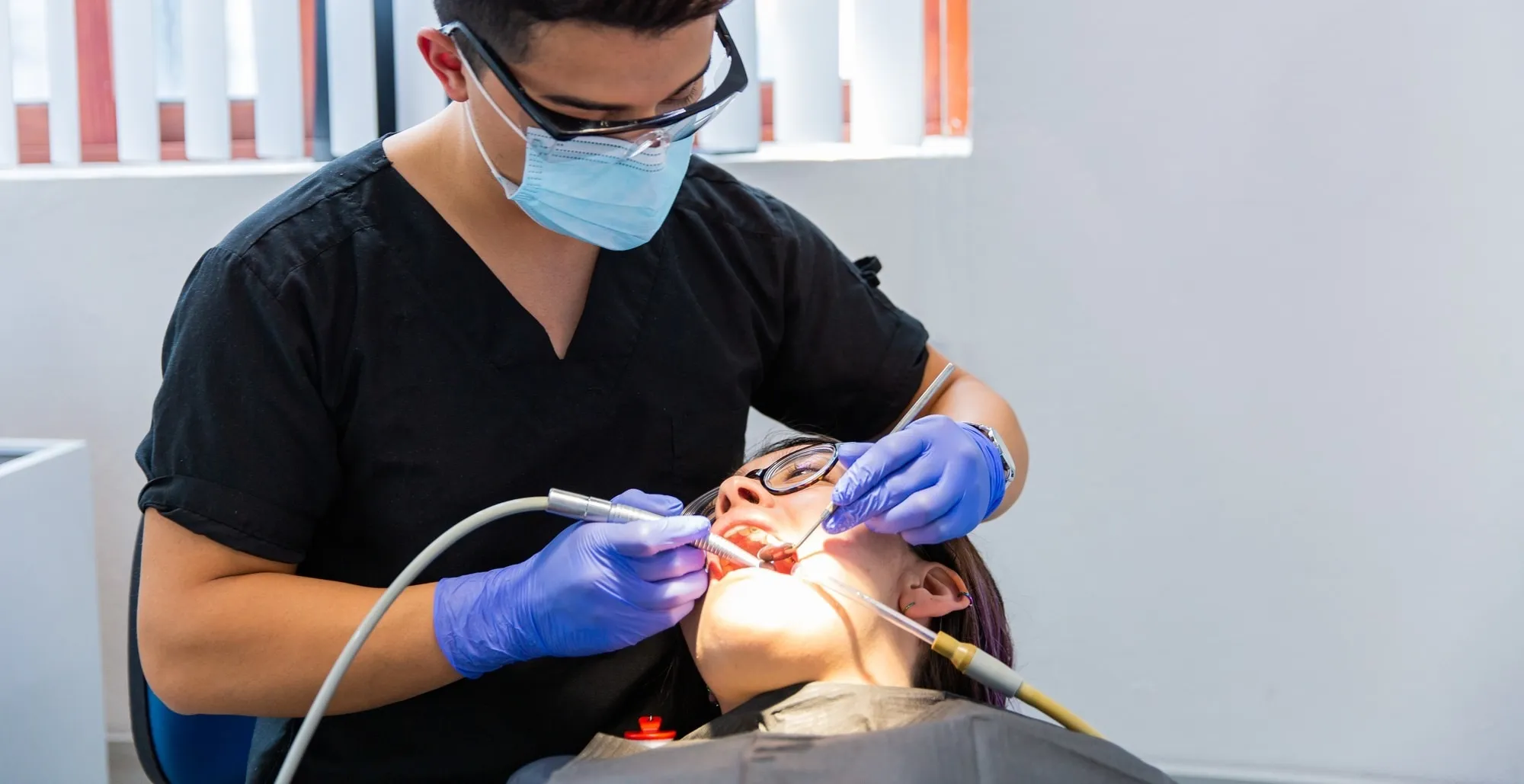
At the dental consultation, expect questions about your medical history and dental history, followed by examination of the teeth and gums. The surgeon may inspect and palpate swelling, use percussion tests, check your bite and tooth mobility, and examine jaw movement and facial sensation.
A digital dental X-ray can show roots, bone, infection, or tooth position. The surgeon selects other imaging when trauma, a nearby nerve, deep infection, or jaw pathology requires greater detail.
Ask the surgeon to coordinate any medication change with the prescribing clinician. Never stop anticoagulants or antiplatelet drugs independently; stopping them can create serious medical risk.
What treatment details change the urgency or risk?
The same pain can lead to different treatment plans because the cause and your medical history change the risk. A dental abscess usually needs source control through drainage, root-canal treatment or extraction.
Antibiotics alone do not remove that source; they are reserved for spreading infection, systemic illness, or when immediate dental treatment is unavailable or unsafe.
Before extraction or another invasive procedure, report intravenous or high-dose antiresorptive medicines, antiangiogenic treatment, including cancer treatment, and previous radiotherapy to the jaws. These details alter the risk assessment for healing and jawbone complications. Do not stop these medicines without advice from the clinician who prescribed them.
After oral surgery, report these specific changes:
- Pain that becomes markedly worse one to several days after extraction, with an empty-looking socket and bad taste or smell, may indicate dry socket rather than a new abscess. Arrange an examination; gentle irrigation, a medicated dressing or analgesia may help. Antibiotics are not usually the main treatment without spreading infection.
- Persistent altered sensation, including numbness of the lower lip, chin or tongue after lower wisdom-tooth surgery, needs prompt reporting to the operating service.
- A loose or displaced tooth needs urgent review even when it is painless. The pulp and supporting bone can be injured before pain develops, and early stabilisation may help preserve the tooth.
Frequently asked questions
Which dental symptoms need emergency or same-day care?
Rapidly increasing facial or neck swelling, difficulty breathing or swallowing, swelling near the eye, and inability to open your mouth normally require emergency assessment or same-day care.
When should you book an appointment with a dental surgeon?
Book an appointment for impacted teeth, complex extractions, jaw injuries, oral cysts, persistent infections, or conditions requiring surgical evaluation.
Should you see a general dentist or an oral and maxillofacial surgeon?
See a general dentist for routine examinations, fillings, cleanings, and straightforward tooth pain. Choose an oral and maxillofacial surgeon when treatment involves complex extraction, jaw surgery, facial trauma, or deeper oral disease.
How should you prepare for a dental-surgeon consultation?
Bring your medication and allergy list, previous dental records, imaging scans, medical history, and a written list of symptoms and questions.
Related services
Dental services at Shanthi Orthopaedic and Dental Clinic Shanthi Orthopaedic and Dental Clinic offers preventive dentistry services focused on maintaining healthy... View service → |
Dental services Tooth-Coloured Filling Treatment at Shanthi Orthopaedic and Dental Clinic Shanthi Orthopaedic and Dental Clinic offers tooth-coloured dental fillings... View service → |
Dental services Bleaching, Veneering, Smile designing Bleaching, Veneering & Smile Designing At Shanthi Orthopaedic and Dental Clinic, we offer personalized cosmetic dental treatments to enhance the... View service → |
Dental services At Shanthi Orthopaedic and Dental Clinic, Digital Dental X-rays provide clear and detailed images of the teeth, gums, jawbone, and surrounding... View service → |