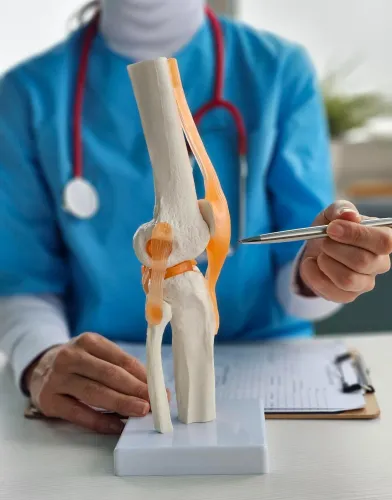

Musculoskeletal pain is common, but persistent pain should not automatically be dismissed as ageing, overwork, or a problem that will disappear without assessment. Symptoms involving bones, joints, muscles, ligaments, or tendons can arise from many different conditions.
An orthopaedic surgeon evaluates the underlying cause before recommending treatment.
For patients in Versova, Maharashtra, knowing when specialist assessment is appropriate can prevent prolonged self-treatment without a clear diagnosis.
When Should You Seek an Orthopaedic Evaluation?
An assessment may be useful when pain lasts longer than expected, repeatedly returns, limits normal movement, or follows an injury.
Other reasons include:
- Persistent joint swelling
- Difficulty walking
- Reduced range of movement
- Recurrent knee instability
- Shoulder weakness
- Pain after sports activity
- Difficulty using stairs
- Joint stiffness affecting daily activities
- Pain following a fall
- Suspected fracture
- Progressive deformity
Severe injuries, inability to bear weight, obvious deformity, or significant swelling after trauma require timely medical evaluation.
Diagnosis Comes Before Treatment
Two patients with knee pain can have entirely different conditions. One may have a ligament injury, another may have arthritis, while someone else may have a meniscal or tendon problem.
That is why treatment should not be selected based only on the location of pain.
The assessment may include medical history, physical examination, movement testing, and review of previous reports. When clinically appropriate, X-rays, MRI scans, or other investigations may be advised.
Does Seeing a Surgeon Mean You Need Surgery?
No.
The term orthopaedic surgeon describes specialist training and does not mean every patient will be advised to undergo an operation.
Depending on the diagnosis, treatment may include activity modification, medication, physiotherapy, strengthening, weight management where relevant, supportive devices, injections in selected situations, or surgical treatment when appropriate.
When Is Surgery Considered?
Surgery may become relevant when there is significant structural damage, persistent functional limitation, failure of suitable non-operative treatment, advanced joint disease, or an injury that requires operative repair.
The decision should consider the severity of symptoms, examination findings, imaging, general health, activity requirements, and expected benefits and limitations.
Questions Worth Asking
Patients can make consultations more useful by asking:
- What is causing my symptoms?
- Is additional imaging necessary?
- What non-operative options are appropriate?
- What activities should I avoid temporarily?
- Would physiotherapy help?
- What would make surgery necessary?
- How long might rehabilitation take?
Clear answers help patients participate meaningfully in treatment decisions.
At Shanthi Orthopaedic And Dental Clinic, orthopaedic evaluation can help determine whether symptoms are related to injury, degeneration, overuse, or another musculoskeletal condition.
For people in Versova dealing with persistent joint or bone problems, obtaining a diagnosis is more useful than repeatedly treating pain alone. Once the cause is understood, treatment can be selected according to the condition, functional needs, and individual health profile.
Keywords