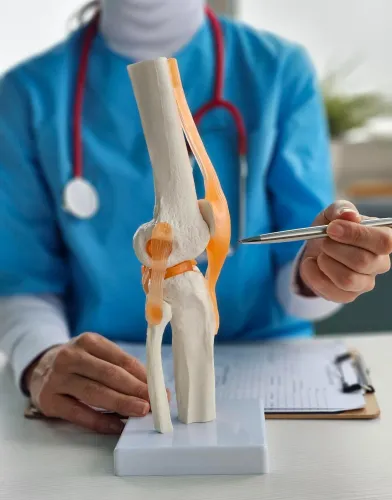
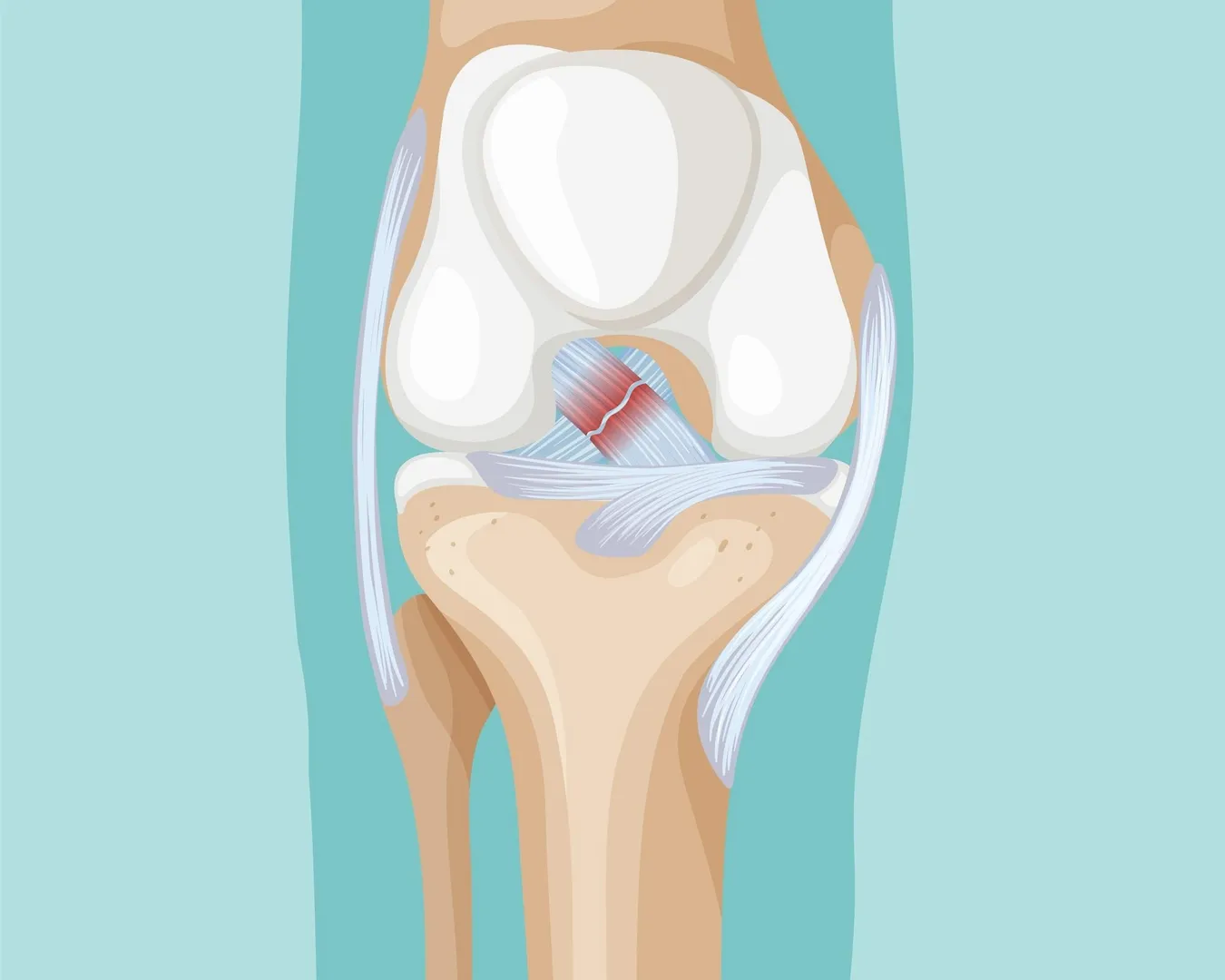
A torn anterior cruciate ligament does not automatically mean you need immediate surgery. The right choice depends on knee instability, associated meniscus or ligament damage, your age, activity goals, and how well the knee responds to structured rehabilitation. By the end, you will know what testing shows, when non-surgical care is reasonable, and what reconstruction involves.
Key takeaways
- A planted-foot pivot, awkward landing, or sudden stop can tear the ACL.
- MRI and a physical examination help confirm the tear and assess other knee damage.
- Non-surgical care can suit stable knees, partial tears, and lower-demand activity goals.
- ACL reconstruction is considered for instability, pivoting sports, or associated knee injuries.
How Does an ACL Tear Happen, and How Is It Confirmed?
A twisting or sudden stopping movement can force the shin forward beneath the thigh, causing how an ACL tear happens. Common triggers include a planted-foot pivot, awkward landing, direct contact, or rapid deceleration. A partial ACL tear leaves some fibres intact; a complete ACL tear disrupts the ligament and usually produces greater looseness.
Seek assessment after a knee injury that causes:
- A popping sensation at the moment of injury
- Rapid swelling within a few hours
- Repeated giving-way or difficulty pivoting
- Loss of full extension
- Pain that prevents normal walking or weight-bearing
These signs suggest an ACL injury but do not prove it. Meniscus injury symptoms include pain along the joint line, catching, locking, or pain during squatting and twisting. Collateral-ligament injuries cause tenderness on the inner or outer knee and pain when the knee is stressed sideways.
During examination, the Lachman test checks forward movement of the shin with the knee slightly bent; excessive movement or a soft endpoint supports ACL rupture. The pivot-shift test looks for abnormal sliding during rotation and more strongly suggests functional instability, though swelling and guarding can limit it.
A partial ACL tear can have a firmer endpoint and less laxity than a complete tear, so examination findings must be interpreted together.
The diagnosis of ACL tear starts with the injury history and examination. Knee radiographs identify fractures or avulsion injuries, while MRI shows the ACL, meniscus, cartilage, and collateral ligaments. MRI is especially useful when symptoms and physical tests do not clearly distinguish combined injuries.
When Can Non-Surgical ACL Treatment Work?
An adult with an isolated ACL tear can safely try non-surgical ACL treatment when the knee does not repeatedly give way, daily activities are manageable, and the person accepts a temporary or permanent reduction in pivoting sports.
This approach is less suitable for athletes who need rapid cutting and jumping, patients with a repairable meniscal tear, or anyone whose instability continues despite rehabilitation.
A structured programme usually includes:
- ACL physiotherapy to reduce swelling, restore full extension and flexion, and rebuild normal walking mechanics.
- Progressive quadriceps and hamstring strengthening, using controlled exercises before advancing to heavier resistance, hopping and running.
- Balance training and bracing to improve neuromuscular control and support the knee during selected activities.
- Activity modification, such as avoiding cutting, pivoting, uneven-ground sports and movements that trigger giving-way.
- Return-to-sport testing, including strength, single-leg control, hopping and change-of-direction assessments.
Rehabilitation can improve strength, confidence and functional stability, but it cannot reliably restore a mechanically competent ACL after a complete rupture. If the knee repeatedly buckles, each episode can increase the risk of meniscal or cartilage damage and warrants review for reconstruction.
Children and adolescents with open growth plates need a separate plan from a knee specialist because adult rehabilitation and surgical decisions do not automatically apply.
When Is ACL Surgery Recommended, and Can the Ligament Be Repaired?
ACL surgery is more suitable when the knee remains unstable, your goals require pivoting or cutting, or your job involves climbing, lifting, or sudden changes of direction. Repeated knee giving way, a physically demanding occupation, a repairable meniscus tear, cartilage damage, or a combined ligament injury all strengthen the case for reconstruction.
An isolated complete ACL tear does not automatically require immediate surgery. A rehabilitation-first plan can suit people with stable daily function and modest activity goals, while athletes and workers who cannot safely avoid twisting may gain more from reconstruction. Surgery also does not prevent every future meniscus problem or osteoarthritis.
ACL reconstruction versus ACL repair involves replacing the ligament rather than stitching it back together:
| Option | What it means | When it applies |
|---|---|---|
| ACL reconstruction | The torn ACL is replaced with a tendon graft | Most complete tears causing instability, especially with high-demand activity |
| ACL repair | The existing ligament is reattached to bone | Selected proximal tears with good-quality tissue and a suitable tear pattern |
| Rehabilitation alone | Strength, balance, and movement control are rebuilt without surgery | Stable knees with manageable symptoms and lower pivoting demands |
Most mid-substance tears do not have enough tissue for reliable repair. Reconstruction is therefore the standard surgical option when surgery is needed.
Do not interpret “early surgery” as surgery within days. After choosing reconstruction, surgery within about three months may reduce additional meniscus or cartilage damage, but swelling, loss of extension, and other injuries need attention first.
Meniscus repair is usually preferred to removing the damaged section when the tear can be preserved, although it lengthens protected rehabilitation.
What Happens During ACL Reconstruction, and Which Graft Is Used?
The ACL reconstruction procedure replaces the torn ligament with a graft rather than stitching most mid-substance tears. Through small arthroscopy incisions, the surgeon inspects the knee, treats meniscus damage when needed, drills tunnels in the thighbone and shinbone, passes the graft through them, and secures it with screws or other fixation devices.
Your own tissue is called an autograft. The main choices have different costs:
| Option | Main advantage | Main trade-off |
|---|---|---|
| Patellar tendon graft | Bone-to-bone healing and low failure risk in some comparisons | More pain at the front of the knee and discomfort when kneeling |
| Hamstring tendon graft | Usually less kneeling pain and a smaller front-knee incision | Harvesting can reduce hamstring strength; laxity and failure rates vary by patient and technique |
| Quadriceps tendon graft | Thick, strong graft with less kneeling pressure than a patellar tendon graft | Quadriceps weakness and front-thigh pain can slow early rehabilitation |
| Allograft | No tendon harvest, so less donor-site pain and a shorter operation | Higher failure risk, especially for young or highly active patients |
The surgeon weighs age, sport, knee demands, previous surgery, tendon quality, and tolerance for donor-site symptoms. AAOS guidance favours an autograft for young or very active patients who choose reconstruction; an allograft is less attractive in that group.
Children with open growth plates need a separate plan. Tunnel placement and graft selection must protect growth, so an adult reconstruction plan cannot simply be copied.
How Long Is ACL Recovery, and How Do You Decide Between Treatment Options?
Pain-free walking is only an early milestone. The ACL rehabilitation timeline usually includes restored full extension, controlled swelling, normal walking, progressive quadriceps and hamstring strength, single-leg balance, and sport-specific drills. After reconstruction, pivoting sport often waits about nine months or longer; returning sooner raises reinjury risk, particularly for young athletes.
| Option | Expected course | Best fit |
|---|---|---|
| Rehabilitation-first | Strength, movement control, and activity modification over several months; surgery remains possible | Stable knees without repeated giving-way, especially for people who do not need frequent pivoting |
| ACL reconstruction | Many months of rehabilitation before cutting and jumping; graft healing and strength must progress together | Repeated instability, high-demand pivoting sport, or associated injuries requiring surgical treatment |
| Meniscus repair with either approach | Longer protected weight-bearing and bending limits; meniscus repair recovery can delay strengthening and sport progression | Repairable meniscal tears where preserving tissue protects future knee function |
Your ACL treatment decision should reflect instability, sport demands, age, work, associated meniscus or ligament damage, and willingness to complete rehabilitation. Non-surgical care is active treatment, not watchful waiting. Shanthi Orthopaedic And Dental Clinic can help structure an orthopaedic assessment around these factors rather than treating an MRI finding in isolation.
- Nearly equal strength and hop-test performance between legs
- Full motion, minimal or no swelling, and stable landing mechanics
- Good cutting control and psychological readiness
Frequently asked questions
How does an ACL tear happen, and how is it confirmed?
A planted-foot pivot, awkward landing, direct blow, or sudden deceleration can tear the ACL. A clinician checks knee stability and uses MRI to confirm the tear and identify meniscus, cartilage, or additional ligament damage.
When can non-surgical ACL treatment work?
Non-surgical treatment can work when the knee remains stable, the tear is partial, and your activity goals do not require frequent pivoting. Treatment focuses on swelling control, strength, balance, and rehabilitation.
When is ACL surgery recommended?
Surgery is considered when the knee repeatedly gives way, instability limits daily or sporting activity, you want to return to pivoting sports, or the ACL tear occurs with repairable meniscus or other ligament injuries.
How long does ACL recovery take, and which graft is used?
Recovery requires structured rehabilitation over several months. Graft choice depends on age, activity, knee demands, previous surgery, and surgeon assessment; options include patellar tendon, hamstring tendon, quadriceps tendon, or donor tissue.