Tartar removal is more than a quick pass over the visible tooth surfaces. You will learn what the dentist checks first, what the vibrating instrument feels like, when routine scaling is enough, and which findings require a separate gum or tooth treatment plan.
Key takeaways
- Your dentist checks gum pockets, teeth, fillings, and sensitivity before scaling.
- Ultrasonic vibrations break hardened tartar while water flushes loosened deposits.
- Routine cleaning is not enough for deep pockets, bleeding gums, or advanced gum disease.
- Expect temporary sensitivity and cleaner tooth surfaces after deposits are removed.
What the dentist checks before scaling begins
Before ultrasonic scaling, the dentist checks whether cleaning alone is appropriate—not simply where tartar is visible. The examination identifies gum disease, damaged teeth, and risks that could change the procedure.
1. The dentist reviews your medical history, medicines, allergies, pregnancy status, diabetes, immune suppression, respiratory disease, and implanted electronic devices. Tell them about blood-thinning treatment; do not stop it without advice from the prescribing clinician.
2. They ask about bleeding, bad breath, sensitivity, loose teeth, pain, and changes you have noticed. These symptoms can point to disease beneath deposits that you cannot see.
3. The dentist examines each tooth, the gumline, fillings, crowns, bridges, and orthodontic appliances for plaque, calculus, decay, cracks, and staining. Soft plaque and surface stains do not require the same approach as hardened calculus.
4. A periodontal probe measures pocket depth and records bleeding, gum recession, tooth mobility, and furcation involvement, where disease affects the roots of a multi-rooted tooth. The dentist compares these findings across your mouth.
5. X-rays are not automatic for every cleaning. The dentist recommends them when deep pockets, suspected bone loss, decay, pain, mobility, or an unerupted problem needs investigation.
These gum cleaning steps in mumbai follow the same clinical purpose elsewhere: assess the gums before removing deposits. Heavy tartar can conceal recession or bone loss, so spaces or increased mobility noticed afterward usually reveal pre-existing damage rather than scaling causing it.
How the ultrasonic scaler removes deposits
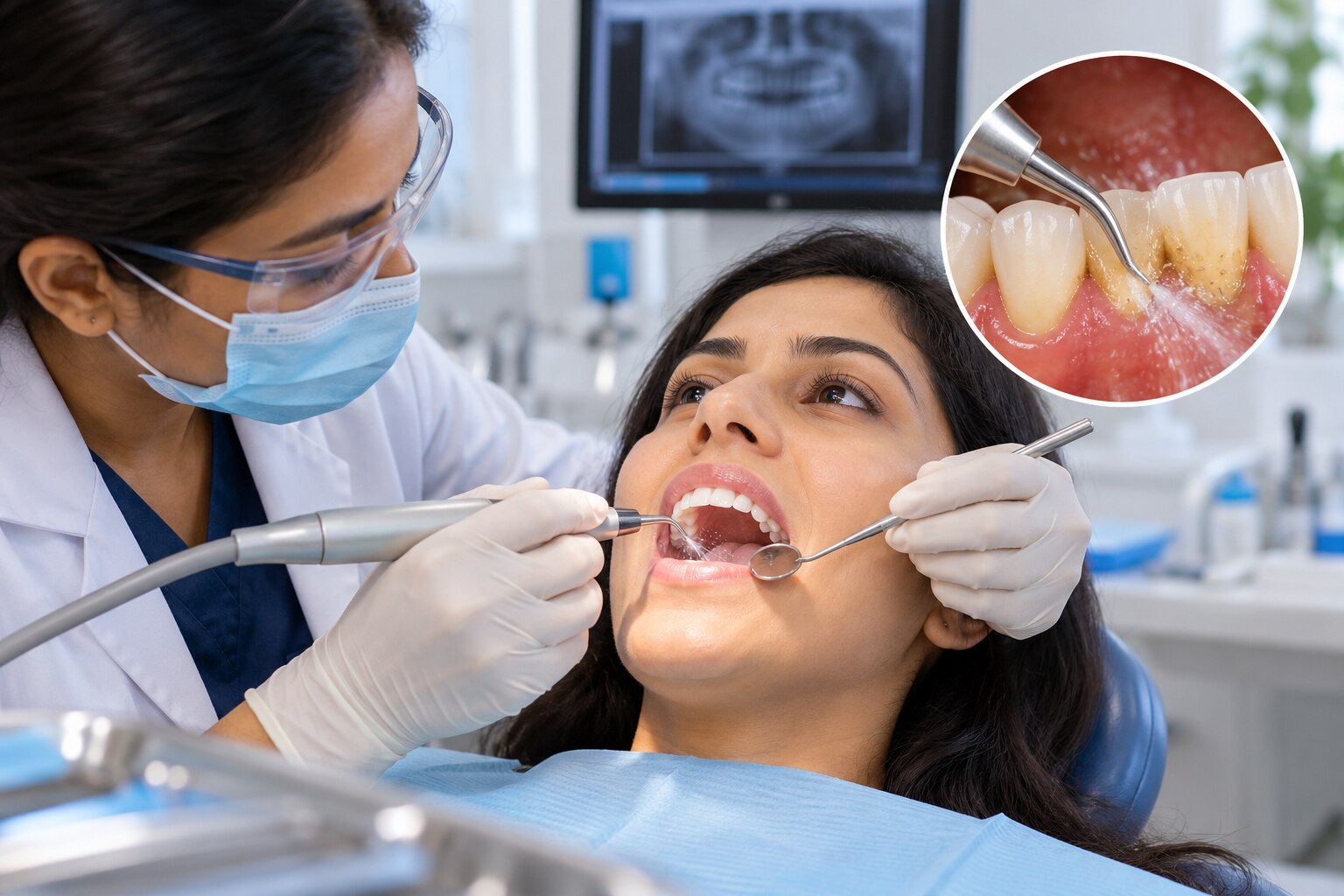
A slim vibrating tip breaks hardened calculus from the tooth surface while a steady water spray cools the tip and washes loosened debris away. Ultrasonic scaling feels like rapid buzzing, light pressure and cool splashes; it should not feel like forceful scraping.
You may hear a high-pitched squeal when the tip touches metal restorations, and inflamed areas can feel briefly sharp or tender.
The dentist changes the tip, angle and power for each area:
- Along the gumline, the tip stays nearly parallel to the tooth so it fractures calculus without digging into the gum. Mild bleeding can occur where gingivitis has made the tissue inflamed.
- Between teeth, a narrow tip reaches the contact areas, while hand instruments finish deposits that the powered tip cannot safely access.
- Around crowns, bridges and fillings, the dentist works carefully at the margins and adjusts technique to avoid chipping or scratching the restoration. Implant surfaces require implant-safe instruments rather than a standard metal tip.
- Around braces, the dentist cleans beside brackets, under the wire and around bands with controlled movements. The water spray helps flush plaque, but it does not replace careful brushing around each bracket.
Soft plaque is mainly removed by brushing and interdental cleaning; ultrasonic scaling targets hardened calculus. Surface stains may improve with selective polishing, but deep discoloration, decay or a damaged restoration needs separate assessment.
For gum care in Andheri West, ask the dentist to explain the ultrasonic scaling process and whether routine cleaning reaches the deposits found in your mouth. Stop and signal if sensitivity becomes painful rather than merely uncomfortable.
When routine cleaning is enough—and when it is not
Routine cleaning is enough when plaque and calculus are limited to the gumline or shallow areas, the gums have no deep periodontal pockets, and no tooth requires separate treatment. A dentist at an ultrasonic dental cleaning clinic chooses the method according to deposit location, pocket depth, bleeding, sensitivity, restorations, and signs of disease.
| Option | What it does | When it applies |
|---|---|---|
| Ultrasonic scaling | Breaks up calculus with vibration and water spray | Above and slightly below the gumline when deposits are firm or widespread |
| Hand scaling | Removes remaining deposits with a small manual instrument | Tight spaces, sensitive areas, or deposits the ultrasonic tip cannot safely reach |
| Polishing | Smooths residual deposits and removes some surface stain | After scaling when roughness or extrinsic staining remains; it is not a treatment for gum disease |
| Root planing | Carefully cleans and smooths root surfaces deeper inside periodontal pockets | Periodontitis with deeper pockets, persistent bleeding, or deposits below the gumline; it may require anaesthetic and several visits |
| Separate tooth or gum treatment | Addresses the underlying disease rather than deposits alone | Cavities, cracked teeth, abscesses, loose teeth, or advanced gum infection |
A routine appointment does not become root planing simply because tartar feels heavy. Root planing requires a periodontal diagnosis, and treating it as an ordinary cleaning can leave infected pocket surfaces unaddressed. Ask which finding led to the recommendation and whether the quoted fee includes anaesthetic, multiple visits, and review.
Polishing should remain selective: repeated abrasive polishing can remove small amounts of tooth substance and cannot replace brushing, interdental cleaning, or periodontal treatment.
What you may notice after the deposits are removed
Brief sensitivity, tender gums, or slight bleeding during the first day or two can follow scaling, especially where calculus covered exposed root surfaces. Your teeth may also look longer, or spaces may seem larger; removing tartar often reveals existing recession and bone loss rather than causing it.
| Symptom | Usually expected | Arrange a dental review when |
|---|---|---|
| Sensitivity | Mild and short-lived, especially with cold drinks | It is severe, localised, worsening, or persists beyond several days |
| Bleeding | A small amount during early brushing of inflamed gums | Bleeding is heavy, spontaneous, or continues despite gentle cleaning |
| Mobility or spaces | A pre-existing looseness or gap becomes more noticeable after tartar removal | A tooth becomes newly loose, painful to bite on, or progressively more mobile |
| Pain | Mild gum tenderness after instrumentation | Pain is intense, throbbing, localised, or accompanied by swelling or fever |
Keep plaque from returning with these steps:
- Brush twice daily for two minutes using fluoride toothpaste and a soft-bristled brush.
- Clean between teeth once daily with floss or an interdental brush; choose a size that fits without force.
- Avoid tobacco, which irritates gums and slows healing.
- Use mouthwash only as directed. Rinsing cannot replace brushing and interdental cleaning.
Call the clinic if sensitivity does not settle, bleeding remains frequent, mobility changes, or pain starts after the appointment rather than improving. A review can check for decay, a crack, exposed dentine, pulp disease, or untreated periodontal disease.
How to prepare for an ultrasonic scaling appointment in Andheri West
Allow 30 to 60 minutes for a straightforward ultrasonic scaling appointment in Andheri West. Heavy calculus, bleeding, sensitivity, or a detailed gum assessment can extend the visit to 60–90 minutes. Deep periodontal cleaning is a different procedure; it targets gum pockets, can require local anaesthetic, and may take multiple visits.
Before you arrive, prepare an accurate medical and medication history:
- Pacemaker or another implanted electronic device
- Pregnancy or possible pregnancy
- Diabetes, immune suppression, or respiratory disease
- Medication allergies
- All current medicines, including aspirin or other blood-thinning treatment
- Previous reactions to dental treatment or local anaesthetic
Do not stop a blood thinner for cleaning unless the prescribing clinician tells you to. Brush and floss normally, bring your medicine list, and mention pain, loose teeth, swelling, or bleeding that occurs without brushing.
When comparing professional teeth cleaning near JP Road, judge the appointment rather than a fixed-price listing:
| Option | Ask before booking | Why it matters |
|---|---|---|
| Listing with a fixed cleaning fee | Is a gum examination included? | Tartar removal alone can miss periodontitis. |
| Clinic with a dental examination | Will the dentist record bleeding, pocket depth, recession, or mobility? | These findings determine whether routine scaling is suitable. |
| Clinic recommending deeper treatment | Is root planing diagnosed and priced separately? | It is not the same as routine ultrasonic scaling. |
At Shanthi Orthopaedic And Dental Clinic, ask which findings would change the plan, whether polishing is selective, and what sensitivity or home-care instructions to expect.
Related service
Dental services Cleaning & Gum Care-Ultrasonic scaling Cleaning & Gum Care – Ultrasonic Scaling at Shanthi Orthopaedic and Dental Clinic Shanthi Orthopaedic and Dental Clinic offers professional teeth... View service → |
Frequently asked questions
What does the dentist check before ultrasonic scaling?
The dentist checks your gums, gum pockets, teeth, fillings, visible tartar, bleeding, swelling, and signs of damage before deciding whether routine scaling is suitable.
How does an ultrasonic scaler remove tartar?
The scaler uses rapid vibrations to break hardened tartar from tooth surfaces. A water spray cools the tip and flushes away loosened deposits.
When is routine ultrasonic cleaning not enough?
Routine cleaning is not enough when deposits extend below the gumline, gum pockets are deep, bleeding is persistent, or periodontal treatment is needed.
What should you expect after ultrasonic scaling?
Your teeth may feel smoother, and temporary sensitivity or mild gum tenderness can occur after hardened deposits are removed.
How should you prepare for an ultrasonic scaling appointment in Andheri West?
Tell the dentist about sensitivity, bleeding, loose teeth, medicines, and medical conditions. Eat normally unless the clinic gives different instructions, and bring recent dental records.
Keywords