Getting complete dentures involves more than selecting artificial teeth. You will need an examination, detailed mouth measurements, trial fitting, insertion and follow-up adjustments, with the schedule changing if teeth must be removed first. By the end, you will know what happens at each stage, what to bring to the consultation and how to manage the first weeks of wearing dentures.
Key takeaways
- Confirm whether you need an upper denture, lower denture, or both.
- Expect impressions, bite records and a trial fitting before final dentures.
- Ask how immediate and conventional dentures affect timing and early reviews.
- Plan adjustment visits for sore spots, looseness and chewing difficulties.
What Complete Dentures Are and Who They Suit
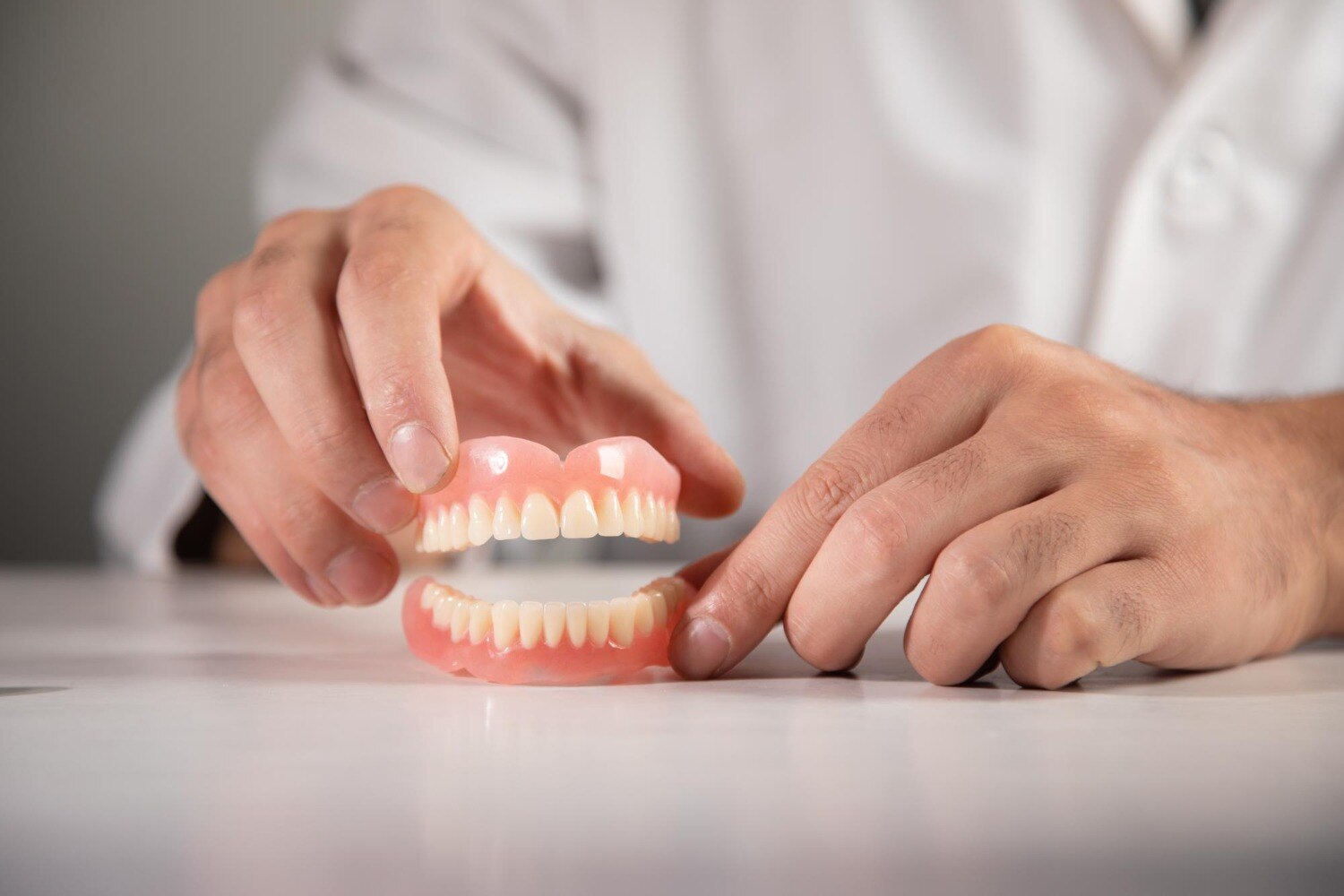
A complete denture is a removable set of artificial teeth supported by the gums. It replaces every tooth in the upper arch, lower arch, or both arches. Choosing a complete dentures treatment process in Andheri West starts with confirming which arch needs treatment and whether any natural teeth remain.
| Option | How it works | Main distinction |
|---|---|---|
| Complete dentures | Rest on the gums and replace all teeth in one or both arches | Removable |
| Partial dentures | Attach around remaining natural teeth and replace missing teeth | Requires usable natural teeth |
| Fixed bridges | Cement onto prepared teeth or dental implants | Cannot be removed by the patient |
| Dental implants | Surgically placed in the jaw to support fixed or removable teeth | Requires surgery and adequate assessment |
Suitability depends on more than tooth loss. The dentist checks remaining tooth roots, gum infection, the shape and height of the jawbone ridge, oral sores, saliva levels, gag reflex and jaw movement. They also assess hand dexterity, expectations, and whether you can remove, clean and handle the appliance.
If you still have teeth, extractions, a partial denture or another treatment plan may be safer than a complete denture. Lower dentures also have less supporting area and can move against the tongue, so the dentist must discuss realistic expectations about retention, chewing and speech.
What Happens at a Full Dentures Consultation
At the first appointment, the dentist decides whether your mouth is ready for complete dentures and whether one arch or both need treatment. A full dentures consultation in Andheri West begins with your medical and dental history, not with impressions.
- Tell the dentist about diabetes, osteoporosis, allergies, previous extractions, dry mouth, every medication, and any healing problem after dental treatment. Bring your current dentures, a complete medication list, relevant medical reports, allergy details, and written concerns about chewing, speech, looseness, gagging, or discomfort.
- The examination covers your gums, residual jaw ridges, tongue, cheeks, oral sores, saliva, jaw movement, and jaw relationships. If you already wear dentures, the dentist checks their fit, stability, pressure areas, and effect on your tissues.
- Discuss tooth shade, gum shade, lip support, expected appearance, speech, eating goals, and whether you want treatment for the upper arch, lower arch, or both. These choices affect the proposed design and try-in.
- Ask what must happen before definitive impressions. Active infection, untreated decay or gum disease, a traumatic ulcer, or a poorly fitting denture may need treatment first; taking impressions too soon can produce an inaccurate fit.
Mention persistent ulcers, bleeding, numbness, sudden looseness, or a denture that no longer fits. Those symptoms need examination before the denture process continues.
How Impressions, Bite Records and Trial Fitting Work
The complete dentures treatment process in Andheri West begins with accurate records, not with the final artificial teeth. The dentist first takes an initial impression or digital scan to create a diagnostic model of your mouth.
1. A custom tray may be made from that model for the final impression. Border molding records how your lips, cheeks and tongue move, helping the dentist create borders that support retention without extending into moving tissues.
2. Wax rims record how the upper and lower jaws relate to each other and establish the intended vertical height. The dentist also discusses the artificial tooth shape, size, arrangement and gum shade with you.
3. At the wax try-in, the teeth are set in wax rather than final acrylic. You and the dentist can assess appearance, lip support, speech, tooth position, comfort and the bite while changes remain easier to make.
4. After the laboratory processes the denture, final insertion includes checks of the borders, pressure areas, retention, stability and occlusion. The dentist then makes selective adjustments rather than expecting you to tolerate a painful spot.
A new denture can increase salivation, alter speech or create sore areas during adaptation, but persistent pain needs a review. Early appointments correct pressure spots and bite errors; later relining may be needed as the jaw ridge changes.
Lower dentures also have less supporting area and can be displaced by the tongue, so they may feel less stable than upper dentures.
Conventional or Immediate Dentures: Timing and Early Reviews
Conventional dentures are delivered after extraction sites and gum tissues heal, while immediate dentures are inserted on the same day as extractions. Healing changes the ridge shape, so an immediate denture avoids a toothless period but rarely provides a final fit from day one.
A conventional complete dentures treatment process in Andheri West commonly follows this sequence:
- Examination and treatment planning, including assessment of the gums, healed ridge and any extraction needs.
- Preliminary impressions to create a diagnostic model.
- Final impressions that record the ridge and the movements of the lips, cheeks and tongue.
- Bite registration to set the relationship and height of the upper and lower jaws.
- Wax try-in to check tooth position, appearance, speech, lip support and bite before acrylic processing.
- Insertion, when the dentist checks borders, pressure areas, retention, stability and occlusion, then makes selective adjustments.
- Early review visits to correct sore spots, looseness or bite errors.
The exact number of visits depends on laboratory work, extractions and tissue healing. An immediate denture commonly needs several adjustments as swelling settles, followed by a reline or replacement after the gums stabilise.
Extra saliva, altered speech, gagging and chewing difficulty are common during adaptation. Persistent pain, repeated ulcers, sudden looseness, numbness or inability to chew requires prompt dental review rather than continued use without assessment.
Adjusting to Dentures and Choosing Local Follow-Up Care
Start with soft foods cut into small pieces. Chew on both sides of your mouth, then add firmer foods gradually as your control improves. Practise difficult sounds aloud and read slowly; speech usually becomes clearer with regular use.
Clean the dentures after meals and remove them for cleaning and usually overnight, unless your dentist gives different instructions.
- Rinse the appliance after eating.
- Brush it with a denture brush and non-abrasive cleanser.
- Clean your gums and tongue with a soft toothbrush or damp cloth.
- Avoid hot water, which can warp the acrylic base.
- Store the dentures as directed so they do not dry out.
A complete denture clinic in Andheri West should explain what happens after insertion, not only how the appliance is made. Ask these questions before agreeing to treatment:
| Question | Why it matters | What to clarify |
|---|---|---|
| How many adjustment visits are included? | Pressure spots and looseness need correction. | Confirm the number and timing. |
| Are impressions and bite records made in-house? | Clinician oversight reduces avoidable communication errors. | Ask who examines and records each stage. |
| What if healing changes the fit? | Gum and bone changes can loosen dentures. | Ask about adjustment or relining. |
| Can the laboratory and clinician repair or remake it? | A clinically unacceptable denture needs a remedy. | Confirm repair, replacement and fees. |
For someone searching for a complete dentures dentist near JP Road, Shanthi Orthopaedic And Dental Clinic can be considered by comparing its follow-up access against these practical questions.
Related service
Dental services Treatment at Shanthi Orthopaedic and Dental Clinic Shanthi Orthopaedic and Dental Clinic offers complete denture solutions for individuals who have... View service → |
Frequently asked questions
Who is suitable for complete dentures?
Complete dentures suit people missing all teeth in the upper arch, lower arch, or both. Your dentist first checks whether any natural teeth remain and whether they should be retained or removed.
What happens during a full dentures consultation in Andheri West?
The dentist examines your gums, jaw, remaining teeth and bite, discusses treatment goals, and confirms which arch needs treatment. They also explain denture options, appointment stages and follow-up needs.
How do impressions and bite records help make complete dentures?
Impressions record the shape of your gums and supporting tissues. Bite records capture the relationship between your jaws, while a trial fitting lets you assess tooth position, appearance and comfort before the final denture is made.
What is the difference between conventional and immediate dentures?
Conventional dentures are made after the gums heal following tooth removal. Immediate dentures are prepared before extraction and fitted on the same day, but they require early reviews and possible adjustments as the gums change.
How long does it take to adjust to complete dentures?
Adjustment involves practising speech and chewing, monitoring sore areas and attending reviews for fit changes. Contact your dentist if pain persists, the denture slips repeatedly or you cannot eat comfortably.
Keywords