A clear tray does not push a tooth through solid bone; it delivers a measured force that triggers the tissues around the tooth to remodel. Understanding that process helps you wear each tray correctly, recognise normal adjustment, and question a plan that is not tracking as expected.
Key takeaways
- Clear aligners move teeth through periodontal-ligament changes and bone remodelling.
- Wear each tray for the prescribed hours and change it on schedule.
- Attachments improve control of rotations, roots and other difficult movements.
- Choose clinical support that uses scans, tracking checks and timely plan adjustments.
How a clear aligner creates movement through bone remodelling
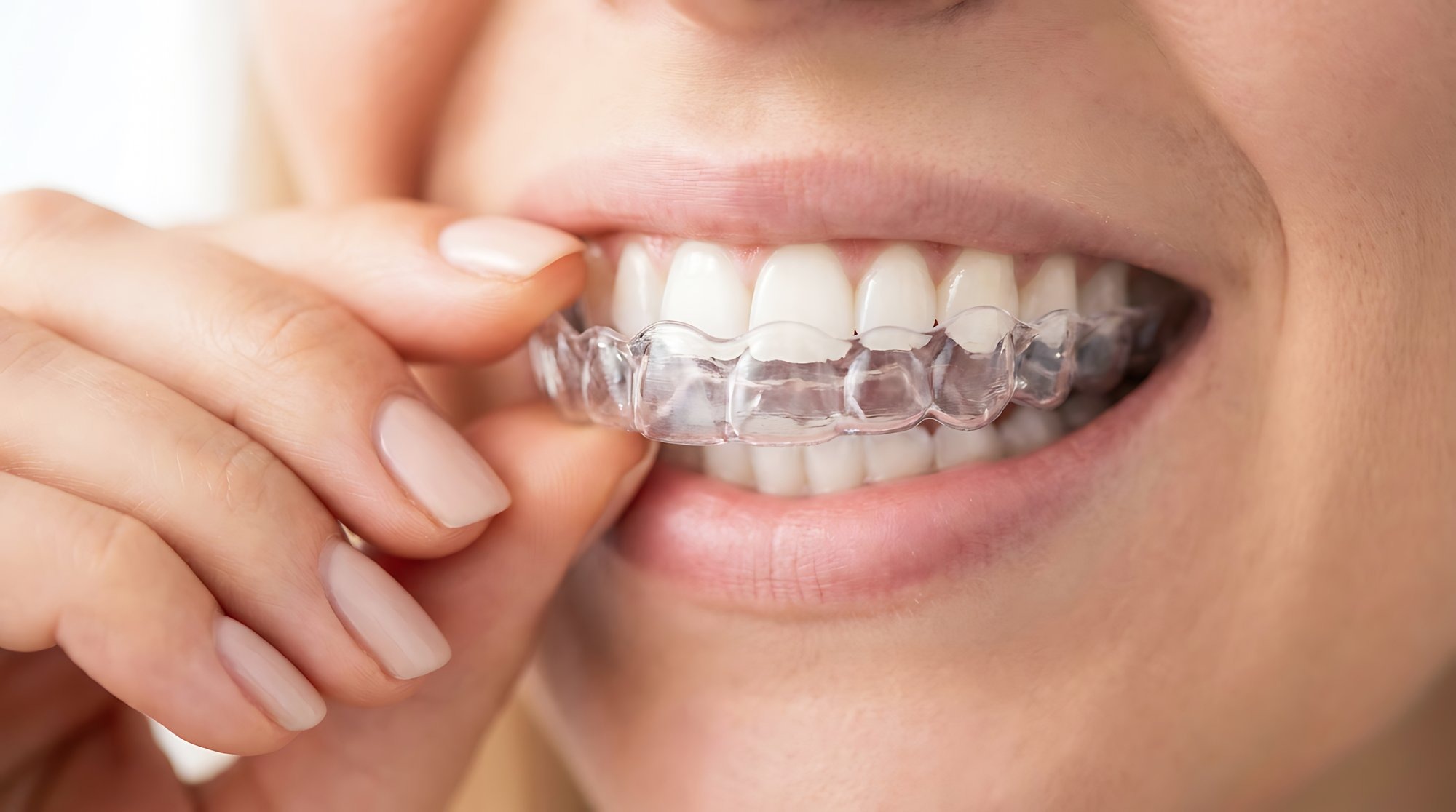
A clear aligner does not shove a tooth through solid bone. It delivers controlled pressure to the crown, while the periodontal ligament—the thin cushioning tissue between the tooth root and jawbone—converts that force into a biological response.
Pressure compresses the ligament on one side of the root and stretches it on the opposite side. The compressed area signals cells called osteoclasts to remove a small amount of bone through bone resorption. On the stretched side, osteoblasts support bone formation on the tension side.
This coordinated change opens a path on one side while maintaining support on the other, allowing the tooth to shift gradually.
Each tray makes a small adjustment rather than demanding the final position at once. Many protocols plan roughly 0.2 to 0.3 millimetres of movement per tray, although the safe step depends on the tooth, the type of movement and your biological response.
The next tray continues the sequence only when the current movement is tracking properly.
Mild tenderness for a few days reflects pressure and ligament inflammation, not automatic damage. Sharp persistent pain, swelling, a loose tooth or a tray that no longer seats requires a clinical review.
A tight tray alone does not prove success: the crown can tip while the root lags, and incomplete seating or a damaged attachment can leave the tooth off course.
Why every tray has a sequence, schedule and wear requirement
An aligner tray is one step in a planned aligner tray sequence, not a standalone mouthguard. Each tray is shaped for a slightly different position, so wearing trays out of order can apply force to the wrong teeth and leave later trays unable to fit.
Keep the aligners in for 20–22 hours per day because teeth need sustained, controlled pressure before the surrounding bone can respond. Remove aligners for eating and drinking anything other than water, then clean your teeth before putting them back.
Long gaps allow teeth to rebound, reduce the intended movement and make the next tray feel tight or fail to seat fully.
Clinicians decide when to change a tray by checking whether the teeth are tracking—the plastic sits closely against the teeth and any attachments, without visible gaps.
- Wear the current tray for the prescribed period and check that it remains fully seated.
- Change trays on the planned schedule, commonly using 7–14-day tray changes. The interval reflects the movement programmed into that tray, your biological response and the tray’s fit.
- Delay the change and contact the clinic if the tray still has gaps, an attachment is not engaging, or a tooth is not following its planned path.
- Attend reviews at the requested intervals so the clinician can compare the teeth with the digital plan and approve progression or provide a refinement.
Finishing a numbered sequence does not guarantee the desired result. The endpoint is accurate tooth position, a stable bite and a fit that holds during the retainer phase.
Which movements aligners control well—and where extra help is needed
Mild tooth tipping, small alignment changes and limited bodily movement are usually the most predictable corrections with aligners. Control becomes harder when the root must move precisely, a tooth must travel vertically, or a round tooth must rotate without a stable grip.
| Movement | How aligners perform | What improves control |
|---|---|---|
| Tooth tipping | Usually predictable for small corrections | A shaped attachment can direct force more accurately |
| Limited rotation | Works best on teeth with flatter surfaces | Attachments and planned overcorrection improve grip |
| Severe rotation | Less predictable, especially on round teeth | Attachments, elastics or fixed appliances may be needed |
| Extrusion | Difficult because the tray can lose contact as the tooth rises | Vertical attachments or elastics provide added traction |
| Root movement and torque | The crown may move while the root lags behind | Attachments, staged movement and radiographic checks improve control |
| Bite or anchorage problems | Tray pressure alone cannot reliably correct every case | Elastics, auxiliaries or fixed appliances may supply stronger anchorage |
Attachments are raised shapes bonded to selected teeth. They change the direction of force and give the plastic a surface to push against, but they do not remove biological or fit-related limits.
Enamel reduction creates space when crowding blocks alignment; it does not replace an attachment for rotation or torque. Significant jaw-size discrepancies, severe open bites or skeletal problems can require elastics, fixed appliances, extractions or jaw surgery rather than camouflage with aligners.
What attachments, scans and tracking checks add to the plan
A tight tray does not prove that the tooth has moved successfully. The orthodontist checks whether the plastic is fully seated and whether each tooth still matches the planned position before approving the next tray.
The review typically looks for:
- A visible gap between the tray and the tooth, which can show incomplete seating rather than successful movement.
- A lost or fractured attachment, reducing the plastic’s grip on a rotated or unusually shaped tooth.
- Missed wear time, which leaves the tooth behind while the sequence continues.
- A bite assessment, because an altered bite can make the tray appear seated while a tooth follows the wrong path.
Dental scans or impressions record the current tooth positions and allow comparison with the digital plan. The clinician may ask you to wear the current tray longer, improve seating, replace an attachment, or rescan and create a refinement instead of forcing the next tray.
Photographs and tray fit show the crowns but not the roots. A crown can tip while its root lags behind, so X-rays when indicated help check root position, bone support and unexpected problems. Active gum disease must also be treated before movement continues; inflamed, poorly supported tissues raise the risk of attachment loss.
What treatment feels like and how to choose the right clinical support
Most new trays cause tightness and pressure for the first few days as surrounding tissues respond. Mild tenderness, temporary speech changes, excess saliva, and small sore spots where an edge rubs usually settle as you adapt; use the fitting and cleaning instructions rather than advancing early.
| What you notice | Usually normal | Arrange a clinical review |
|---|---|---|
| Tenderness | Dull discomfort after inserting a new tray | Persistent sharp pain, swelling, or a loose tooth |
| Fit | Firm contact with the planned teeth | A tray does not seat, rocks, cracks, or leaves a tooth uncovered |
| Attachments | Mild rubbing or sensitivity | A broken or detached attachment |
Treat active gum disease before elective movement. Moving teeth through inflamed, poorly supported tissues can worsen attachment loss, while an uncleaned mouth under an aligner makes plaque control harder. Shanthi Orthopaedic And Dental Clinic can be part of that discussion if you need gum assessment and orthodontic planning in the same setting.
Before starting, ask the aligner specialist:
- How will you check gum health, roots, bone support, fillings, and existing dental work?
- What movements need attachments, enamel reduction, elastics, or fixed braces?
- How will you handle a tray that does not track, and are refinements included in the plan?
- What result defines completion: the final tray, stable bite, or both?
- How long will you wear retainers, and will nighttime wear continue indefinitely?
The number of trays does not prove treatment difficulty. Choose support that monitors fit and function, not a provider promising the shortest sequence.
Related service
Dental services Invisalign and Aligners/ Braces -Metal/ceramic/self-ligating Invisalign, Clear Aligners & Braces at Shanthi Orthopaedic and Dental Clinic Achieve a straighter, healthier-looking smile with professional... View service → |
Frequently asked questions
How do clear aligners move teeth through bone?
An aligner applies controlled pressure to the tooth crown. The periodontal ligament responds by directing bone remodelling around the root, allowing gradual movement.
Why do clear aligners follow a sequence and wear schedule?
Each tray applies a planned amount of force. Wearing trays for the prescribed hours and changing them on schedule keeps movement aligned with the treatment plan.
Which tooth movements do clear aligners control well?
They commonly control mild crowding, spacing and selected tipping movements. Rotations, root movement, extrusion and significant bite changes often need attachments or additional techniques.
What do attachments, scans and tracking checks add?
Tooth-coloured attachments give the aligner extra grip and leverage. Scans record tooth positions, while tracking checks identify poor fit or movement that has fallen behind the plan.